
Banks in Pakistan hold almost Rs 40 trillion of deposits and are regulated by the State Bank of Pakistan (SBP). They include large conventional banks, fast-growing Islamic banks, microfinance banks and a new group of app-only digital banks. This guide explains the types of banks in Pakistan, how strong the banking system is, how deposits are protected and how to choose the right bank.
Last updated: 5 November 2026 by Ahmed.
Banking System at a Glance (2026)
| Measure | Figure |
|---|---|
| Bank deposits | Nearly Rs 40 trillion (reported October 2026) |
| New deposits in January-June 2026 | Rs 3.67 trillion |
| Capital adequacy ratio | 19.6% (first half of 2026) |
| Bad loans (NPLs to total loans) | 5.5% in June 2026, down from 6.1% in December 2025 |
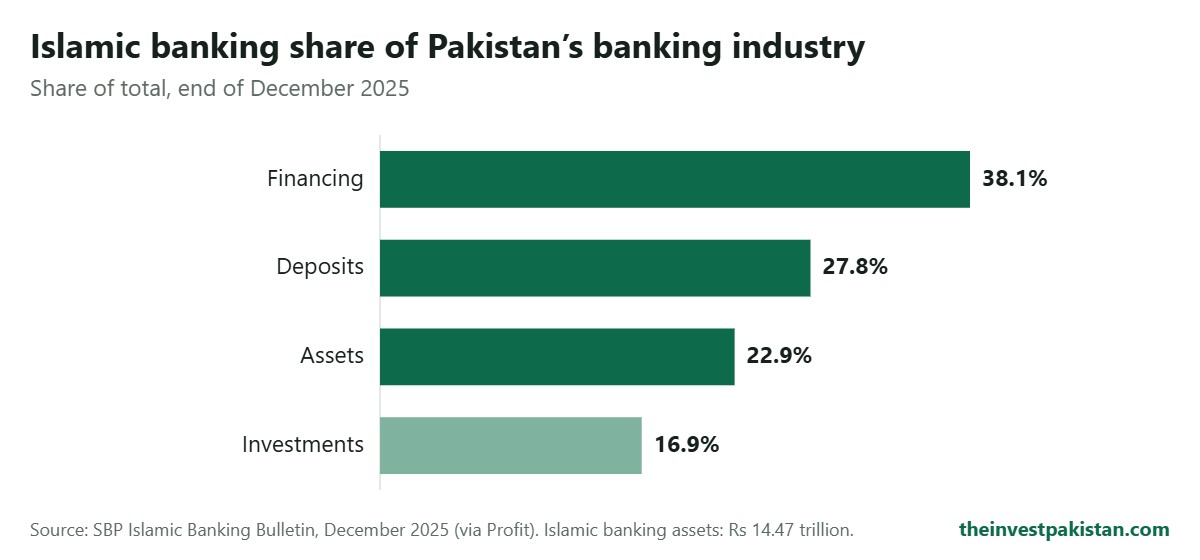
| Islamic banking share of deposits | 27.8% (December 2025) |
| Deposit protection | Up to Rs 1 million per depositor per bank |
Types of Banks in Pakistan
| Type | What they do | Read more |
|---|---|---|
| Conventional commercial banks | Interest-based deposits and loans; most of the market | Conventional banks |
| Islamic banks | Shariah-based accounts and financing; fastest-growing segment | Islamic banks |
| Microfinance banks | Small loans and savings for low-income people and small businesses | Microfinance banks |
| Digital banks | App-only banks with full licences | Digital banks |
| Specialised banks | Banks for specific sectors, such as agriculture (Zarai Taraqiati Bank) and housing (HBFC) | SBP list of banks |
| Foreign banks | Branches or subsidiaries of international banks | SBP list of banks |
How Strong Are Banks in Pakistan?
The SBP said in its review of the first half of 2026 that banks remained resilient. Their capital was well above the regulatory minimum, bad loans fell, and both deposits and lending grew. Returns were also healthy, with return on equity around 19% in June 2026. Much of the banking sector’s money is still invested in government securities, though the SBP has urged banks to lend more to private businesses.
How Your Deposits Are Protected
- The Deposit Protection Corporation (DPC), a subsidiary of the SBP, covers eligible deposits up to Rs 1 million per depositor per bank if a member bank fails.
- Conventional, Islamic, microfinance and digital banks that are members are all covered.
- If you hold more than Rs 1 million, spreading your money across banks or keeping part in government savings schemes reduces risk.
Key Rates That Affect Your Money
- Policy rate: 12% from 26 October 2026.
- Minimum savings rate: 10.5% from 1 November 2026 for individuals, on balances up to Rs 1 crore (Rs 10 million).
- Tax on bank profit: 20% for filers and 40% for non-filers (tax year 2027).
See bank profit rates, saving accounts and term deposits for full details.
How to Choose a Bank in Pakistan
- Decide whether you want Islamic or conventional banking.
- Compare profit rates and charges on the exact account you need.
- Check the mobile app: Raast, bill payments and instant transfers.
- Check branch and ATM coverage where you live.
- Confirm the bank is a Deposit Protection Corporation member.
The Future of Banking in Pakistan
Three changes are reshaping banks in Pakistan: the move to riba-free banking by 1 January 2028, the arrival of digital banks and instant Raast payments, and pressure from the SBP to lend more to businesses and households rather than mainly to the government.
Frequently Asked Questions
How many types of banks are there in Pakistan?
The main types are conventional commercial banks, Islamic banks, microfinance banks, digital banks, specialised banks and foreign banks.
Which is the largest bank in Pakistan?
HBL and National Bank of Pakistan are among the largest by branch network and deposits, and Meezan Bank is the largest Islamic bank.
Is my money safe in Pakistani banks?
Banks are supervised by the SBP, and deposits are protected up to Rs 1 million per depositor per bank by the Deposit Protection Corporation.
This guide is for general information only and is not financial or tax advice. Rates, returns and rules change often, so confirm the latest figures with the official source before you invest.
Related Guides
- Conventional banks
- Islamic banks
- Digital banks
- Microfinance banks
- Saving accounts in Pakistan
- Bank profit rates
Sources
- The News: SBP says banks remain resilient in H1 2026
- ProPakistani: Bank deposits near Rs 40 trillion
- Profit: Islamic banking assets, December 2025
- Geo News: SBP raises policy rate to 12%
Free tool: work out your monthly and yearly profit, before and after tax, with our bank profit calculator.