
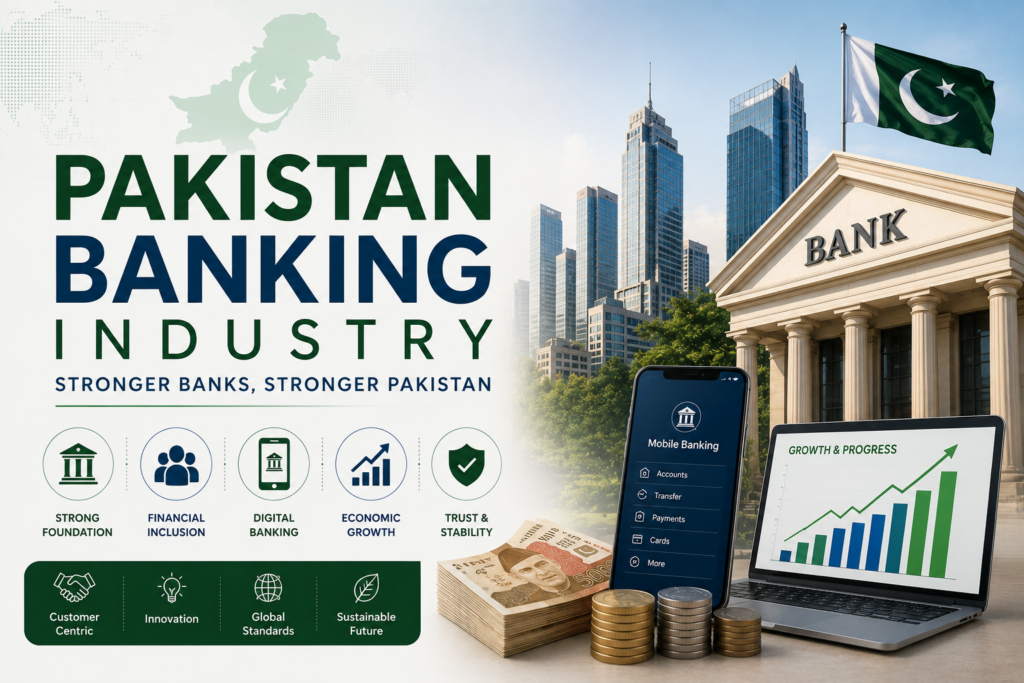
Pakistan Banking Industry: A Pillar of Financial Growth
Pakistan’s banking industry is a vital engine of the nation’s economy, serving as a backbone for financial stability, economic development, and individual aspirations for financial freedom. For Pakistanis looking to invest wisely and plan strategically, the banking sector offers a wealth of opportunities—from secure savings options to innovative investment products—all tailored to the unique economic and cultural fabric of the country. An in-depth exploration of the banking industry in Pakistan is provided here, its evolution, key players, emerging trends, and practical ways it can empower you to achieve your financial goals.
Overview of the Banking Sector in Pakistan
The banking landscape in Pakistan is a dynamic mix of public, private, foreign, and Islamic financial institutions, overseen by the State Bank of Pakistan (SBP), the central bank established in 1948. As of April 2025, the sector includes over 30 commercial banks, with major players like Habib Bank Limited (HBL), National Bank of Pakistan (NBP), United Bank Limited (UBL), MCB Bank, and Bank Alfalah dominating the market. Islamic banking institutions, such as Meezan Bank, Bank Islami, and Dubai Islamic Bank Pakistan, hold a significant share, reflecting the country’s demand for Shariah-compliant finance. Together, these banks manage assets worth trillions of Pakistani Rupees (PKR), with a network of thousands of branches and ATMs stretching from bustling Karachi to remote villages in the North region.
The industry’s journey began with a nationalized framework in the 1970s, when banks like NBP were state-owned. The liberalization reforms of the 1990s shifted the tide, privatizing many institutions and fostering competition. Today, the sector balances traditional banking services—like savings accounts and loans—with cutting-edge digital platforms and Islamic finance, catering to a population of over 240 million with diverse financial needs.
The Role of Banks in Financial Planning
For Pakistanis, banks are more than repositories for cash—they are partners in building wealth and securing the future. Here’s how they support your financial planning:
- Savings and Deposits: Banks offer a variety of accounts to grow your money safely. A basic savings account might earn a decent profit annually depending on the interest rates, while a fixed-term deposit could yield regular stream of income over a year. These are perfect for conservative savers preparing for emergencies or big expenses.
- Loans and Credit: Whether you’re a small trader in Faisalabad needing PKR 100,000 to expand your shop or a family in Rawalpindi eyeing a PKR 1 million home, banks provide financing solutions. Personal loans, auto loans, and mortgages are widely available. Islamic banks offer alternatives like Diminishing Musharakah for homes, where you co-own the property with the bank, paying it off in installments.
- Investment Products: Banks bridge the gap to wealth creation. Major banks distribute mutual funds with entry points as low as PKR 5,000, offering 8-12% returns annually. Government securities like Pakistan Investment Bonds (PIBs) or National Savings Certificates, accessible via banks, provide stable returns—PKR 50,000 invested at 10% could grow to PKR 80,000 in five years. These options suit both novice and seasoned investors.
- Digital Banking: The digital revolution has transformed access. With apps like HBL Mobile, Meezan’s Al Meezan app, or branchless platforms like JazzCash, Easypaisa you can transfer a amount, pay electricity bill, or investin a fund—all from your smartphone. This is a game-changer for rural areas, where physical branches are scarce.
- Remittances: With millions of Pakistanis working abroad, banks handle billions in PKR annually. A worker in Middle East sending monthly income via a remittance service fuels family savings and local investment, strengthening the economy.
Key Trends Shaping Pakistan’s Banking Industry
The banking sector is evolving to meet modern demands. Here are the trends driving its future:
- Digital Transformation
Pakistan is embracing a digital banking boom. The SBP’s Raast platform, launched in 2021, enables free, instant PKR transfers, being done in seconds. Mobile banking users have crossed 12 million, with apps offering bill payments, loan applications, and investment tracking. Banks are expanding ATM networks (over 17,000 nationwide) and introducing biometric verification, ensuring even a small withdrawal is secure and convenient. - Islamic Banking Growth
Islamic banking now accounts for over 20% of total banking assets, with Meezan Bank leading at PKR 2 trillion in assets. Products like Mudarabah savings accounts and Ijarah financing for vehicles cater to Pakistan’s faith-driven market. The SBP aims for 35% Islamic banking penetration by 2025, signaling robust growth ahead. - Financial Inclusion
Over 100 million Pakistanis remain unbanked, but the SBP’s National Financial Inclusion Strategy is closing the gap. Microfinance banks like Telenor Microfinance Bank offer loans to women entrepreneurs in rural areas, while branchless banking via Easypaisa serves villages. The Ehsaas Savings Account, tied to the government’s welfare program, encourages low-income families to save monthly, fostering a savings culture. - Green Banking
Climate change is pushing banks toward sustainability. The SBP’s Green Banking Guidelines promote loans for solar panels or energy-efficient machinery for factories. Green bonds initiative in a pilot phase, letting you in renewable projects like wind farms and solar power plants, aligning profit with purpose. - Cybersecurity and Innovation
As digital transactions soar—PKR 100 trillion annually—banks are bolstering cybersecurity. Two-factor authentication and AI fraud detection protect your savings. Innovations like blockchain for remittances and contactless payments are enhancing efficiency and trust.
How Banks Support Your Financial Freedom
Banks play a crucial role in helping individuals and families in Pakistan work toward lasting financial freedom. Beyond simply holding your money, modern banks offer a wide range of services that empower you to save, invest, borrow wisely, and manage your finances more effectively. Banks are your allies in achieving financial independence. Here’s how to maximize their offerings:
1. Safe and Structured Saving
Banks provide secure savings accounts, term deposits, and profit-bearing schemes that encourage disciplined saving habits. These tools allow you to grow your money steadily while keeping it safe from theft, inflation, or poor spending choices.
2. Access to Credit and Capital
From personal loans to home financing and small business credit, banks offer financial leverage to achieve life goals without draining your savings. Access to credit makes it possible to invest in education, property, or entrepreneurship—key pillars of financial growth.
3. Investment and Wealth-Building Tools
Many commercial banks now offer investment products such as mutual funds, government bonds, and unit-linked insurance plans. These options help you diversify your income and build long-term wealth, often with the guidance of in-house advisors.
4. Digital Banking for Financial Control
With the rise of mobile banking apps and digital wallets, Pakistani banks are making it easier than ever to track spending, pay bills, and manage budgets on the go. Financial freedom starts with control—and digital tools empower you to take charge of your money in real time.
5. Financial Inclusion and Literacy
Banks play a key role in improving financial literacy by offering account packages tailored for youth, women, freelancers, and rural populations. By bringing more people into the formal financial system, banks help ensure that the journey toward financial freedom is accessible to all.
Challenges and Opportunities
Challenges persist: high interest rates deter borrowers, rural banking access lags (only 20% penetration), and non-performing loans (PKR 800 billion) strain profitability. Inflation (10-15%) erodes savings value, and financial literacy remains low. Yet, opportunities shine: a youthful population (64% under 30), middle-class income, and SBP policies like subsidized loans (especially for SMEs) signal growth potential.
The Road Ahead
Pakistan’s banking industry is your launchpad to financial freedom. Whether you’re a new beginner with a small monthly saving, a farmer who have to borrow subsidized loan, or a professional, banks offer tailored solutions. As they embrace digital tools, Islamic finance, and green initiatives, their impact will deepen.
Whether you’re saving for the future, launching a small business, or investing for retirement, Pakistan’s banking sector is a trusted partner in your financial journey. Choosing the right bank—and making full use of its services—can accelerate your path to true financial independence.
Take action: open a account, explore a mutual fund, or download an digital financial app. Visit www.sbp.org.pk for updates. The banking sector is evolving to empower Pakistanis—step in and build your financial future today.