
Stock Market
A Complete Guide for Investors in Pakistan
The stock market is one of the most influential components of the modern financial system. It connects businesses that need capital with individuals who want to grow their wealth. In Pakistan, the stock market has gradually evolved into a regulated, transparent, and accessible investment platform for people from all income levels.
For individuals seeking financial freedom, long-term wealth creation, and protection against inflation, understanding the stock market is no longer optional.it is essential. This comprehensive guide explains the stock market in detail, covering its history, working mechanism, financial importance, risks, and role in wealth creation.
What Is a Stock Market?
A stock market is an organized marketplace where shares of publicly listed companies are bought and sold. A share represents a unit of ownership in a company. When you purchase shares, you become a partial owner and gain the right to benefit from the company’s growth, profits, and future potential.
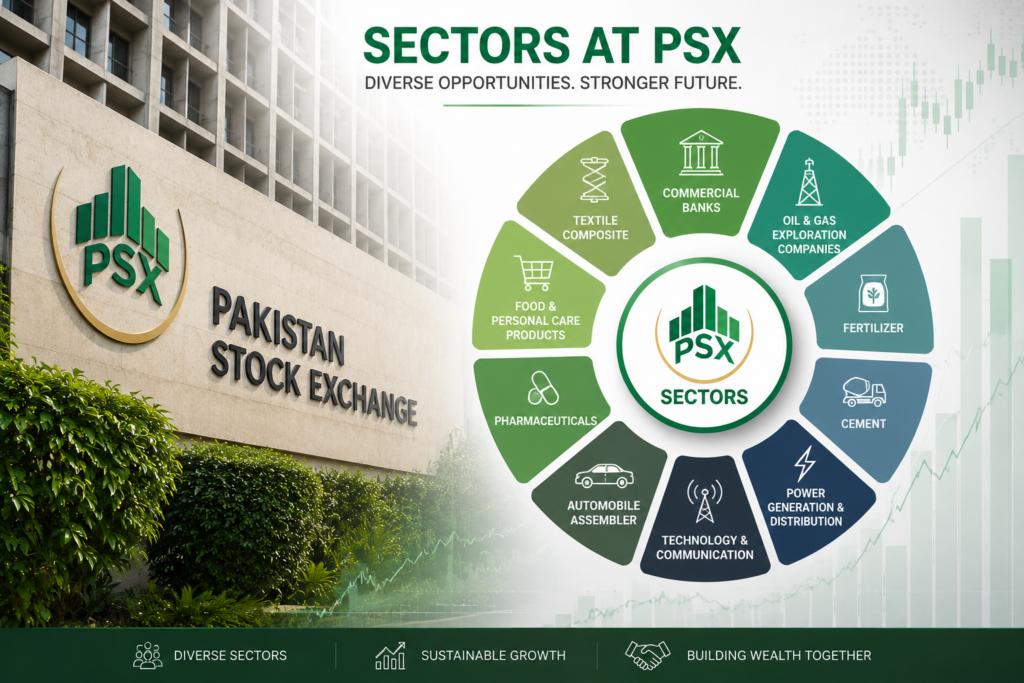
In Pakistan, stock market trading is conducted through the Pakistan Stock Exchange (PSX), which operates under the supervision of the Securities and Exchange Commission of Pakistan (SECP).
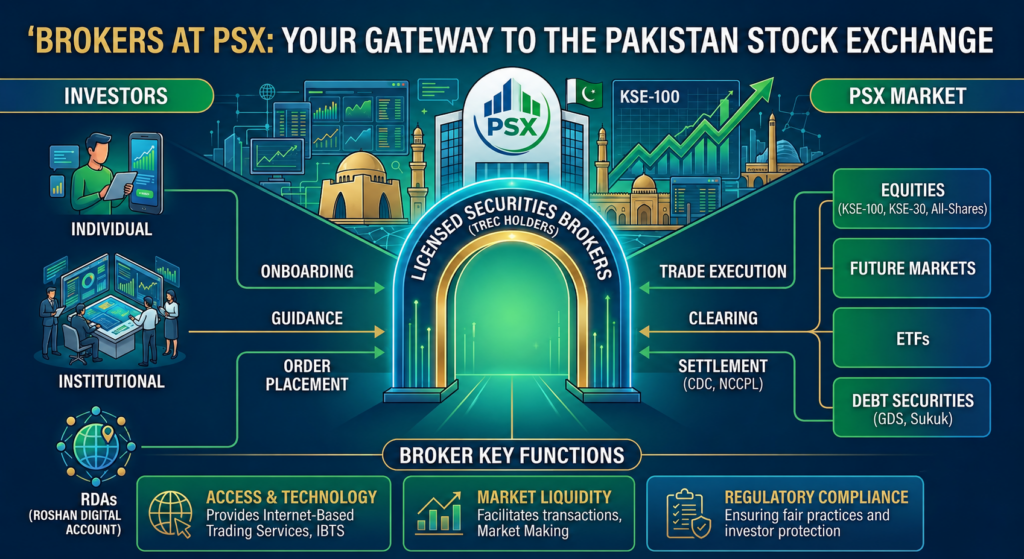
The stock market is not a single physical location; instead, it is a digital ecosystem supported by brokers, regulators, clearing houses, and electronic trading systems.
Why the Stock Market Exists
The stock market exists to fulfill two fundamental economic needs:
1. Capital Raising for Companies
Businesses require large amounts of money to expand operations, invest in technology, hire talent, and explore new markets. Listing on the stock market allows companies to raise capital without relying solely on bank loans.
2. Wealth Creation for Investors
Investors can put their savings into productive assets and participate in corporate growth. Over time, this leads to capital appreciation, dividend income, and long-term financial stability.
This relationship benefits both businesses and investors and contributes to overall economic growth.
Brief History of the Stock Market
Global Evolution of Stock Markets
The concept of the stock market dates back to the early 1600s, when European traders needed capital for overseas trade. The Dutch East India Company became the world’s first publicly traded company, issuing shares to investors.
Over time, organized exchanges developed in London, New York, Tokyo, and other financial centers, creating today’s global financial markets.
History of the Stock Market in Pakistan
Pakistan’s stock market history began soon after independence:
-
- 1947 – Karachi Stock Exchange (KSE) established
-
- 1970 – Lahore Stock Exchange founded
-
- 1992 – Islamabad Stock Exchange formed
-
- 2016 – Merger of all three exchanges into Pakistan Stock Exchange (PSX)
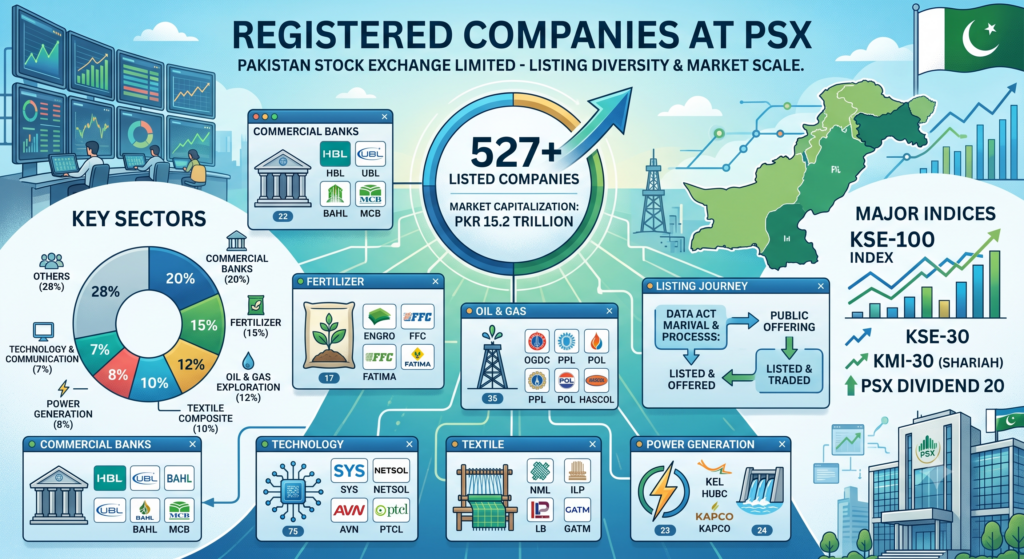
Today, PSX hosts hundreds of companies across diverse sectors and is considered one of South Asia’s major emerging markets.
Pakistan Stock Exchange (PSX) An Overview
The Pakistan Stock Exchange serves as the central platform for equity trading in Pakistan.
Key Functions of PSX
-
- Provides a transparent trading environment
-
- Ensures fair price discovery
-
- Protects investor interests
-
- Encourages corporate governance
-
- Facilitates capital formation
Regulatory Bodies
-
- SECP Market regulator
-
- CDC (Central Depository Company) Share custody and ownership
-
- NCCPL Clearing and settlement
This regulatory framework ensures market integrity and investor confidence.
How the Stock Market Works
The stock market operates through a well-defined mechanism:
Step-by-Step Market Process
-
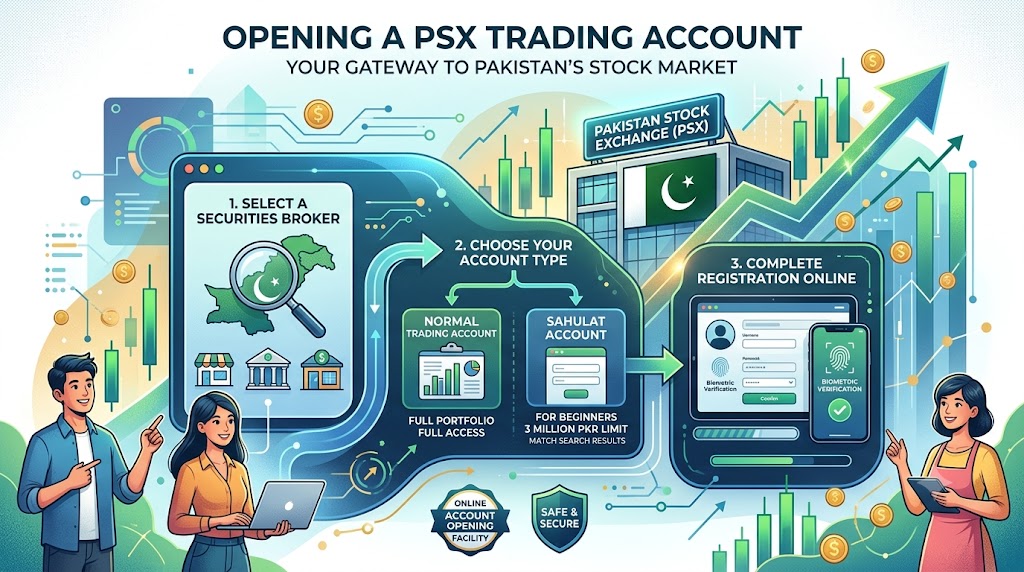
- Investors open accounts with licensed brokers
-
- Orders are placed through online trading platforms
-
- Buy and sell orders are matched electronically
-
- Trade confirmation is issued
-
- Shares are transferred via CDC
-
- Funds are settled through NCCPL
All transactions are recorded digitally, making the system efficient and secure.
How Companies Enter the Stock Market
Companies enter the stock market through an Initial Public Offering (IPO).
IPO Process in Pakistan
-
- Conversion into a public limited company
-
- Audited financial statements
-
- Regulatory approvals from SECP
-
- Public offering of shares
-
- Listing on PSX
Why Companies Go Public
-
- Raise growth capital
-
- Improve credibility
-
- Increase transparency
-
- Enable shareholder participation
Types of Shares in the Stock Market
Ordinary Shares
-
- Voting rights
-
- Dividend entitlement
-
- Ownership participation
Preference Shares
-
- Fixed dividends
-
- Priority over ordinary shareholders
-
- Limited voting rights
Most retail investors in Pakistan invest in ordinary shares.
How Shares Are Registered and Owned
Shares in Pakistan are maintained electronically through CDC accounts.
Benefits of Electronic Ownership
-
- No risk of loss or forgery
-
- Instant ownership transfer
-
- Transparent record keeping
-
- Easy monitoring
This system has significantly improved investor protection.
Types of Investors in the Stock Market
Retail Investors
Individual investors investing personal savings.
Institutional Investors
Banks, insurance companies, mutual funds, pension funds.
Traders
Short-term participants focusing on price movements.
Long-Term Investors
Investors who focus on business fundamentals and long-term growth.
Each group plays a vital role in market liquidity and stability.
How Do You Make Money from the Stock Market?
1. Capital Gains
Buying shares at lower prices and selling at higher prices.
2. Dividend Income
Companies distribute profits to shareholders.
3. Compounding Returns
Reinvesting profits leads to exponential growth over time.
4. Portfolio Appreciation
A diversified portfolio reduces risk and enhances returns.
Long-Term Investing vs Short-Term Trading
Long-Term Investing
-
- Lower risk
-
- Less stress
-
- Focus on fundamentals
-
- Suitable for financial freedom
Short-Term Trading
-
- Higher risk
-
- Requires expertise
-
- Time-intensive
-
- Emotion-driven
For beginners in Pakistan, long-term investing is generally safer and more sustainable.
Financial Importance of the Stock Market
Inflation Hedge
Stocks help preserve purchasing power.
Economic Growth
Stock markets reflect business expansion.
Capital Formation
Savings are converted into productive investments.
Employment Growth
Listed companies create jobs and innovation.
Risks Involved in the Stock Market
Market Risk
Price fluctuations due to economic conditions.
Company Risk
Poor management or financial performance.
Emotional Risk
Fear and greed affecting decisions.
Systemic Risk
Political or global economic crises.
Risk can be managed through education, diversification, and patience.
Stock Market and Financial Freedom
Financial freedom means having enough assets to cover expenses without active income.
The stock market supports this goal by:
-
- Generating passive income
-
- Growing retirement funds
-
- Beating inflation
-
- Supporting early retirement
With disciplined investing, the stock market becomes a powerful financial engine.
Common Myths About Stock Market Investing
-
- Stock market is gambling

- Stock market is gambling
-
- Only rich people can invest
- Only rich people can invest
-
- You need perfect timing
- You need perfect timing
-
- Losses are guaranteed
- Losses are guaranteed
In reality, informed and disciplined investors succeed over time.
Stock Market vs Other Investment Options

Role of Education in Stock Market Success
Successful investors continuously:
-
- Study financial statements
-
- Understand economic trends
-
- Learn risk management
-
- Improve decision-making
Financial literacy is the strongest long-term advantage.
Final Thoughts
The stock market is not a shortcut to quick wealth. It is a structured, regulated, and time-tested system that rewards patience, discipline, and knowledge.
For people in Pakistan aiming for financial freedom, the stock market offers:
-
- Long-term wealth creation
-
- Passive income opportunities
-
- Inflation protection
-
- Financial independence
By starting early, investing consistently, and focusing on quality businesses, individuals can transform the stock market into a lifelong financial partner.
Related Articles